Tag: books

  • Establishing Daily Routines for Effective Writing

    Establishing Daily Routines for Effective Writing

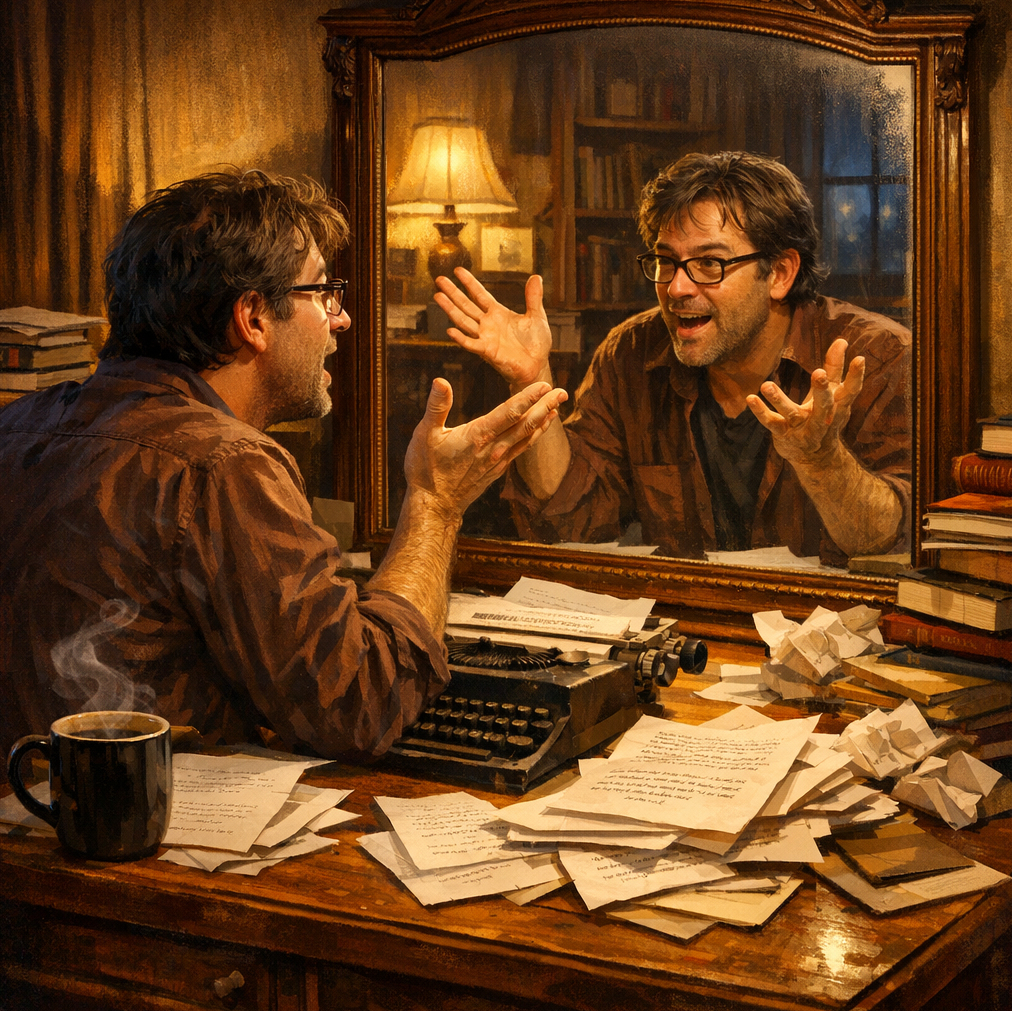
    My wife is always teasing me about how structured my days are. “It’s 8:30, time for Rick to grab breakfast, then go to his office and work.”

    “It’s eleven o’clock, time to work out.”

    “We don’t always have to eat dinner at five.”

    But for me these routines are important in helping me manage my day. It’s critical that we establish routines in our daily lives so as not to become overwhelmed with all of the mundane tasks that occupy our days. I know a few people who are so disorganized that they act surprised when it’s time to go to work, as if that moment were a wild beast quietly sneaking up on them.

    You probably know a few in your own life. Those people who are never on time and can’t really be relied upon to be where they promise they will be.

    “I’m sorry, was that today?” They’ll tell you even though they had known about the appointment for than a month and had been reminded periodically. There is a certain subset of society who likes to blame this on a new phenomenon called Time Blindless. Of course, I’m old school and willing to call it what it is. Laziness. But that’s a subject for another time and place.

    Today I want to talk about writing and routine, and why a routine is important in not only writing, but in every aspect of a person’s life. Routine provides a structure to your day, a roadmap if you will that guides you through the myriad events of your day, ensuring you meet your own expectations and arrive on time at any appointments you may have scheduled.

    When I served in the military punctuality was drilled into us relentlessly. “If you’re ten minutes early you’re on time. If you’re on time you’re late.” Unfortunately, command had a totally different idea as to what was considered on time.

    We had another saying in the military that tied neatly into the first. “Hurry up and wait.” It was not unusual to get the order to move out at 0600, 6am for those not familiar with military time, yet we’d all be sitting around in the staging area come 9am waiting for someone to pull their foot out of their ass so we could get going.

    It’s a good thing this was in training and there was not a friendly force out there somewhere desperately holding on waiting for us to show up with a promise to roll at dawn. Of course, most would not have expected the unit to move when promised anyway. Yet, somehow, we have managed to maintain our place as a reigning superpower.  

    And here I’m going off on another tangent. The real reason behind all this is that I should have had this finished and uploaded to my blog yesterday. But here I am at 8:53 am ET, writing this post. Sorry.

    As for writing, creating, or learning a new process it’s important to structure your day around your goals. When you establish a time and place, and stick to it, you’re telling yourself that this is the time and place where I will write. At first it might seem counterproductive to restrict your writing to a certain time and place, but it’s important to do so as you will train your body, and your mind to be ready to create at that time. At first you may end up browsing the web, or writing a late blog post, but you’re forcing yourself to concentrate on writing at this time.

    That doesn’t mean you can’t brainstorm the rest of the day. Most of us gather material for our work from our daily interaction. Writing down ideas, and thoughts throughout your day will help you store them for when you cam sit down to write.

    How many have heard the excuse. “I can’t write unless my muse is speaking to me, or they’re inspired to create.”   

    When you train yourself to write at a certain time and place you’ll be amazed to learn how easily it comes to you with a little practice. So be patient. Even if you only have an hour a day or can only manage a hundred words. That’s a hundred words that weren’t there before. A hundred words a day can add up, that’s 3000 words a month, which is the length of a typical short story. In one hundred days a hundred words a day will net you 10,000 words. Are they perfect words? Likely not, but everyone starts somewhere.

    What you’ll find when you start focusing your efforts is your word count for that hour can climb. Right now, as I’m writing this post it has been twenty-five minutes since I started and I’ve managed to put down 778 words to this point. They’re not completely clean by any stretch of the imagination, but within the next half an hour I’ll have a finished post that hopefully you’re reading right now.

    Tell me about your process. Do you have a set time and place to write, or create? Or do you take the scattered approach and grab what time you can spare throughout the day?  

  • A conversation with myself. Cheryl from Adversary

    A conversation with myself. Cheryl from Adversary

    1. Can you describe how your mother’s death changed your relationship with your father and your brother Frankie?

    When Mom died, it was like the ground disappeared beneath us. Dad just shut down. He was there, but not really there, you know? He drank more, and I felt like I had to be the adult, especially for Frankie. He needed someone, and I guess I needed to feel needed. But it was lonely. I missed having a real family, and sometimes I was angry at Dad for not being able to hold it together for us.

    2. What was going through your mind the night you left home with Andrea and her friends?

    Honestly? I was mad. At Dad, at Michelle, at the world. I wanted to get away, to feel like I had some control over my life. I thought maybe if I just left for a while, someone would notice. But mostly, I just wanted to forget everything for a night. I didn’t realize how quickly things could go wrong.

    How did you feel when you realized you were in over your head with Andrea’s group and the events that followed?

    Terrified. I tried to act tough, but inside I was panicking. I kept thinking, “What have I done?” I wanted to go home, but I was too proud to admit it. When things got violent, I just wanted to disappear. I felt so stupid for putting myself, others in danger.

    4. What was your relationship like with Michelle, and how did it evolve over the course of the story?

    At first, I hated her being around. She wasn’t my mom, and I didn’t want her to try to be. I was jealous, I guess, and angry that she could step in when I felt so lost. But she never gave up on us. She was there, even when I pushed her away. Over time, I saw how much she cared, and I realized she was hurting too. Now, I’m grateful for her. She’s family.

    5. Can you talk about your protective feelings toward Frankie? What drives you to defend him, even at great personal risk?

    Frankie’s my little brother. He’s different, and people don’t always understand him. After Mom died, I felt like it was my job to look out for him. He’s innocent, and I couldn’t stand the thought of anyone hurting him. I guess I needed to protect him because I couldn’t protect Mom, and I didn’t want to lose anyone else.

    6. How did you cope with the guilt and trauma after the violent events involving the police and your classmates?

    I didn’t, not at first. I tried to pretend it didn’t happen, but the nightmares wouldn’t let me forget. I felt guilty for surviving, for not doing more, for being there at all. It took a long time to talk about it, and even longer to forgive myself. Dad and Michelle helped, just by being there and not judging me.

    7. What did it mean to you when Michelle gave you the family heirloom on your eighteenth birthday?

    It meant everything. It was like Mom was reaching out to me, telling me it was okay to move forward. Michelle didn’t have to do that, but she did, and it made me realize she really cared. It helped me let go of some of the anger and finally accept her as part of our family.

    8. How did your view of your father change as he confronted his own grief and the supernatural threats facing your family?

    I saw him as human again. Not just my dad, but a person who was hurting and trying his best. When he fought for us, I realized he hadn’t given up, that he was just lost. It made me want to forgive him, and to try to rebuild what we’d lost together.

    9. Looking back, what advice would you give to someone facing loss and feeling alone, as you once did?

    Don’t shut people out. It’s easy to get angry and push everyone away, but that just makes it worse. Let people help you, even if you don’t think you want it. And don’t be afraid to talk about how you feel. You’re not alone, even when it feels like it.

    10. Now that your family has found some peace, what are your hopes for the future, for yourself, and for Frankie and your new family?

    I just want us to be happy. I want Frankie to have a chance at a normal life, whatever that means for him. I want Dad to find peace, and for Michelle to know she’s loved. As for me, I want to move forward, maybe go to college, and see what life has to offer. I want us to be a real family again.

    If you’d like to learn more about Cheryl and her family grab a copy of Adversary, book one in the Shadows of the Past trilogy.

    Click on cover for more info.
  • Pre-Order Carver House

    Pre-Order Carver House

    Click on cover to pre-order

    Every city has places you don’t go after dark. Carver House is one of them.

    After a concert in 1984, three suburban friends take a wrong turn into Carver Heights—a neighborhood where the streetlights don’t work and the buildings lean like corpses. When they spot a barefoot boy wandering alone in the cold, they stop to help.

    Big mistake.

    The address he gives leads to Carver House: a rotting apartment tower where hallways shift behind your back, stairwells spiral into nothing, and doors open onto things that should not exist. The lights don’t work. The air smells like old sickness. And something is hunting them in the dark.

    As Jamie, Todd, and Wendy search for an exit, the building twists around them—deeper, darker, stranger. The boy wasn’t lost.

    He was bait.

    And Carver House doesn’t let go.

    Some detours lead you home. This one doesn’t.

    A nightmare of living architecture for fans of Scott Smith’s The Ruins, Adam Nevill’s The Ritual, and readers who crave 80s horror nostalgia with cosmic dread.

    About the Author

    Jonathan Daniel writes horror that breaks you.

    Madness. Monsters. Blood. His books deliver relentless scares for readers who want darkness, visceral violence, and characters pushed past their limits.

    He got hooked on horror after reading Pet Sematary way too young (thanks for the nightmares, Dad). These days he lives in Birmingham, Alabama with his wife and hyperactive Boston Terrier, Buster—brewing beer, binging 80s slashers, and trying to convince people that creature features are high art.

    Subscribe to Unspeakable Encounters and join The Unhinged at: byjonathandaniel.com

  • Weekly Writing Challenge 02/18/2026

    Weekly Writing Challenge 02/18/2026

    With the conclusion of I AM, we come to the letter J, and the Jogah, mythical little people in Iroquois lore.

    J is for Jogah, the little people.

    Jeffery was doing his best to help his parents move into their new home. But he was only eight and not strong enough to carry any of the boxes his father and the men he hired to move them were bringing into the house. Occasionally they would find a box more suitable to his size, but there weren’t very many, so he spent most of his time just trying to stay out of the way.

    He felt like he’d been uprooted and transplanted to a place he did not belong. While country life looked like it would give them more room to stretch their legs and even provided a yard for him to play in, everything seemed to be so far away. In the city where he grew up everything they needed was within a block or two and they could easily walk to their destination.

    One of the first things to strike him when they arrived at their new home was the silence. There were no shouts, no horns or squealing tires, nor was there any music that always seemed to be playing in the background when you lived in the city. A cacophonous blend of rap, heavy metal, foreign and domestic in languages running the gamut from English to Russian and everything in between that formed a wall of near constant sound in the background. Even during class, when they were supposed to be focused on their lessons, that incessant beat could be heard. Like the heartbeat of sprawling beast that encompassed everything in. On the contrary, in the country, silence ruled and though he was only eight, he imagined it was going to take him some time to get used to this.

    As the focus shifted from the upstairs room to the first floor the men moved their canvas tarps and he was forced up to the second floor to stay out of the way as the rest of the furniture was brought in. As he sat at the head of the stairs, he glanced over his shoulder, into the shadowy length of the hall and felt the first stirring of an old fear he believed he had outgrown.

    An old memory blossomed, and he recalled in terrifying detail the one time he had left his bedroom in the middle of the night and wandered down the hall to his parent’s room. Finding them both sound asleep he ventured into the kitchen, a place he should have been familiar with, but at night with the shadows crowding into the corners it took on a more sinister appearance that caused him to pause. After a fruitless moment of staring into the shadows he crossed to the sink and pushed one of the kitchen chairs close to the cabinets. He’d done this a thousand times before, but tonight with the shadows so close something felt off. As he was filling his water glass he became aware of a deepening chill as the shadows seemed to grow from the corners of the room to reach out and envelope him. As the night deepened around him the scent of lilacs filled his nose as a fear spread throughout his belly.

    There had been stories about the apartment where he lived, whispered tales shared among his small circle of friends. Everyone in the building knew the old lady who once lived there, a sweet old soul who was always baking cookies and offering them to anyone willing to sit for a minute to fill the loneliness her life had become. Without realizing it, as he listened to the stories, he came to feel sorry for the old lady who died in her sleep. But now, as he stood at the kitchen sink filing his glass, he felt anything but sorrow as the cloying stench of lilac threatened to suffocate him.

    He began hyperventilating and struggled to bring his breathing back under control. A scream lodged in his throat as a shadowy arm emerged from the emptiness on his right and reached for the faucet. Chilled fingers caressed his cheek in a loving manner that was anything but in his current state and the trapped scream burst forth.

    His parents raced into the kitchen, flipping on the light and sending the shadows scurrying to far corners of the room. They found him standing at the sink, hands grasping the edge of the counter staring wide-eyed into nothing.

    That had been then, and this was now, his parents had explained away his encounter as the overactive imagination of a child who had listened to too many stories in the neighborhood. But from that night on he refused to leave his room at night. Many nights he lay awake with the blankets pulled up to his chin listening to incessant sounds of the city around him. Drawing some measure of comfort from the presence of life in the loneliness of the night. Beneath that ever-present roar came odd creaks and groans that filled the shadows all around him. At any moment he expected chilled fingers to touch his brow.

    He shook his head to dislodge the old memory and turned his attention from the hallway to what was happening on the first floor. The furniture guys were wrestling with the couch that had only managed to make it hallway into the house before it became stuck. As he watched then work he noticed a detail that had escaped his earlier visit to the house. Next to the front door, a miniature version of the door had been built into the wall on the right side, complete with sidelights and all. It was only twelve inches tall, its presence sparking his curiosity.

    What could possibly use that door? He wondered.

    To be continued!

    Back when milk was delivered daily to your home, many homeowners put in a small door next to the main entrance so the milkman could slip his delivery into the house. But what else might find its way into the security of your home?

  • Exploring the Power of Horror Tropes in Storytelling

    Exploring the Power of Horror Tropes in Storytelling

    Storytelling thrives on the familiar and the unexpected. Nowhere is this more evident than in the use of tropes. Tropes, recurring themes, motifs, and character types are the building blocks of narratives. Shaping how stories unfold and how audiences connect with them. In horror, tropes like the “final girl,” haunted houses, forbidden fruit, or the impostor in plain sight are instantly recognizable, but their influence extends far beyond the genre.

    What makes horror tropes so powerful is their adaptability. The “final girl,” for example, is a staple of slasher films, representing resilience and survival. Yet, this trope appears in thrillers, action movies, and even science fiction, where a lone protagonist must confront overwhelming odds. Haunted houses, another classic horror motif, are not limited to ghost stories. They can symbolize psychological turmoil in dramas or serve as metaphors for societal decay in dystopian fiction.

    Tropes also serve as bridges between genres. The forbidden fruit, rooted in horror’s fascination with temptation and consequence, is equally at home in romance, fantasy, and crime stories. By crossing genres, tropes invite writers to subvert expectations, blending elements of horror with comedy, mystery, or adventure. This fusion creates fresh narratives that surprise and engage readers, challenging them to reconsider what they know about both horror and storytelling itself.

    Moreover, tropes influence how stories are told and received. They provide a shorthand for emotion and meaning, allowing writers to quickly establish atmosphere or character dynamics. When used thoughtfully, tropes can deepen psychological tension, heighten suspense, or evoke empathy. However, their true power lies in reinvention. Horror writers excel at twisting familiar tropes, breathing new life into old patterns and crafting stories that resonate across genres.

    In the end, tropes are not just tools for horror. They are catalysts for creativity, shaping the stories we tell and the ways we experience them, no matter the genre.