Tag: books

  • Plotting vs Pantsing: Which Writing Style Suits You?

    Plotting vs Pantsing: Which Writing Style Suits You?

    When embarking on a writing project, authors often find themselves choosing between two distinct approaches. Plotting and pantsing. Each method offers unique advantages and challenges, and understanding their differences can help writers select the path that best suits their creative style.

    Plotting: Structure and Strategy

    Plotting, sometimes called outlining, is a methodical approach where writers plan their story in advance. This can involve creating detailed outlines, mapping out character arcs, and organizing scenes before writing the first draft. Plotters benefit from having a clear roadmap, which helps maintain narrative coherence and logical progression. This structure is especially useful for complex stories with multiple subplots or intricate character relationships. Plotting can also minimize writer’s block, as the author always knows what comes next, and it often leads to more efficient revisions since potential plot holes are addressed early on. However, plotting can sometimes stifle spontaneity, making stories feel predictable or causing writers to get stuck in the planning phase without moving forward.

    Pantsing: Creativity and Discovery

    Pantsing, derived from “flying by the seat of your pants,” is a more spontaneous approach. Pantsers dive into writing with minimal planning, allowing the story and characters to evolve organically. This method fosters creativity and can lead to unexpected twists, making the writing process exciting and dynamic. Pantsers discover their plot as they write, which can result in fresh, authentic narratives. However, this freedom comes with risks: stories may lack structure, leading to plot holes or pacing issues, and writers may experience burnout if inspiration wanes.

    Choosing Your Path

    Ultimately, neither method is universally superior. Some writers blend both approaches, outlining key points but leaving room for discovery. The choice depends on your personality, project needs, and what inspires you most. Whether you thrive on structure or embrace creative chaos, understanding plotting and pantsing empowers you to craft stories in a way that feels authentic and productive.

    Plotting, or outlining, is favored by writers who prefer structure and advance planning. Notable authors who are known for their plotting methods include:

    • J.K. Rowling: Famously plotted the entire Harry Potter series before writing, using detailed outlines and spreadsheets to track characters and plot points.
    • Brandon Sanderson: Known for his intricate world-building and complex plots, Sanderson meticulously outlines his novels before drafting.
    • James Patterson: Outlines every chapter before writing, ensuring a tight, fast-paced narrative.
    • John Grisham: Plans his legal thrillers in detail, mapping out the story before beginning the first draft.
    • Dan Brown: Uses extensive outlines and research to structure his bestselling thrillers.

    These authors demonstrate that plotting can help manage complex stories and maintain consistency throughout a series or standalone novel.

    Authors Who Use Pantsing

    Pantsing, or “writing by the seat of your pants,” is embraced by writers who prefer spontaneity and organic story development. Well-known pantsers include:

    • Stephen King: Often writes without a clear outline, letting the story and characters guide the narrative. King discusses this approach in his memoir, On Writing.
    • George R.R. Martin: Describes himself as a “gardener” rather than an “architect,” preferring to discover the story as he writes.
    • Margaret Atwood: Known for allowing her stories to evolve naturally, without rigid outlines.
    • Neil Gaiman: Embraces discovery writing, letting ideas and characters develop as he goes.
    • Ernest Hemingway: Wrote with minimal planning, focusing on the flow of the narrative.

    Other notable pantsers include Diana Gabaldon (Outlander), Mark Twain, Isaac Asimov, Dean Koontz, and Hilary Mantel. These authors value the creative freedom and unexpected twists that pantsing can bring to their work.

    If you’re a writer what method works best for you? I’m more of a pantser until the work starts becoming unwieldy at which point I’ll start plotting the rest of the novel to fill in any holes.

  • A Conversation with Myself

    A Conversation with Myself

    An interview with Sheriff Paul Odenton.

    Sheriff Paul Odenton appeared as a supporting character in Cursed, which I realize now I should have titled. The Curse of Porter Mines.

    1. Sheriff Odenton, you’ve served your community for decades. What first inspired you to pursue a career in law enforcement, and how has your perspective on the job changed over the years?

    When I was a young man, I believed in the idea of justice, of right and wrong being clear as day. My father always said someone had to stand up and do the hard things, and I suppose I took that to heart. Over the years, though, I’ve learned that the world isn’t so black and white. There’s a lot of gray and sometimes doing the right thing means making choices that haunt you long after the paperwork’s filed.

    2. The disappearances of children in Porter Mines have haunted your career. How do you cope with the emotional toll of unsolved cases, especially those involving the most vulnerable members of your community?

    You never really cope, not fully. Those faces stay with you. You see them in your dreams, and you hear their parents’ voices every time the phone rings. I try to remind myself that I did everything I could, but the truth is, you always wonder if you missed something. I lean on my wife, Maggie, and the folks I trust. Sometimes, all you can do is keep going and hope you make a difference the next time.

    3. Throughout the investigation, you’re confronted with both rational explanations and local legends, such as the Witch of Porter Mines. How do you balance skepticism with the need to respect the fears and beliefs of the townspeople?

    I was trained to look for evidence, to trust what I can see and prove. But in a place like Porter Mines, legends are as real as the ground we walk on. Folks need something to explain the unexplainable. I try to respect that, even if I don’t always believe it myself. Sometimes, listening to their fears is as important as chasing down leads.

    4. The events in Porter Mines often put you at odds with political pressures and public scrutiny. How do you maintain your integrity and focus on justice when facing criticism from both the community and local government?

    It’s not easy. There’s always someone looking over your shoulder, second-guessing your decisions. I remind myself why I took this job in the first place, to protect people, not to win popularity contests. I do my best to be honest, even when the truth is ugly, and I try to treat everyone fairly, no matter who’s watching.

    5. In your view, what role does the past, both personal and communal, play in shaping the present dangers and fears in Porter Mines?

    The past never really leaves us. In Porter Mines, old wounds fester, and stories get passed down like family heirlooms. Sometimes, the things we don’t talk about, like secrets and regrets are what hurt us most. I’ve seen how history repeats itself when we don’t face it head-on. That’s true for families, and it’s true for towns.

    6. You’ve witnessed the impact of trauma on families, including your own. What advice would you give to others in law enforcement about supporting victims and their loved ones through tragedy?

    Listen. Don’t just go through the motions, really listen. People need to know you care that you’re not just another badge. Be patient, and don’t make promises you can’t keep. Sometimes, all you can offer is your presence and your willingness to help them carry the weight, even if only for a little while.

    7. Now that the case has reached its conclusion, what lessons do you hope the community, and perhaps future generations of law enforcement, will take from your experiences in Porter Mines?

    I hope folks remember that evil isn’t always a stranger in the night, it can be the things we ignore, the pain we bury, or the anger we allow to fester. For those who come after me, I’d say. Never stop asking questions, never stop caring, and never forget that every case is someone’s whole world. Sometimes, the only thing standing between hope and despair is the person willing to keep searching for the truth.

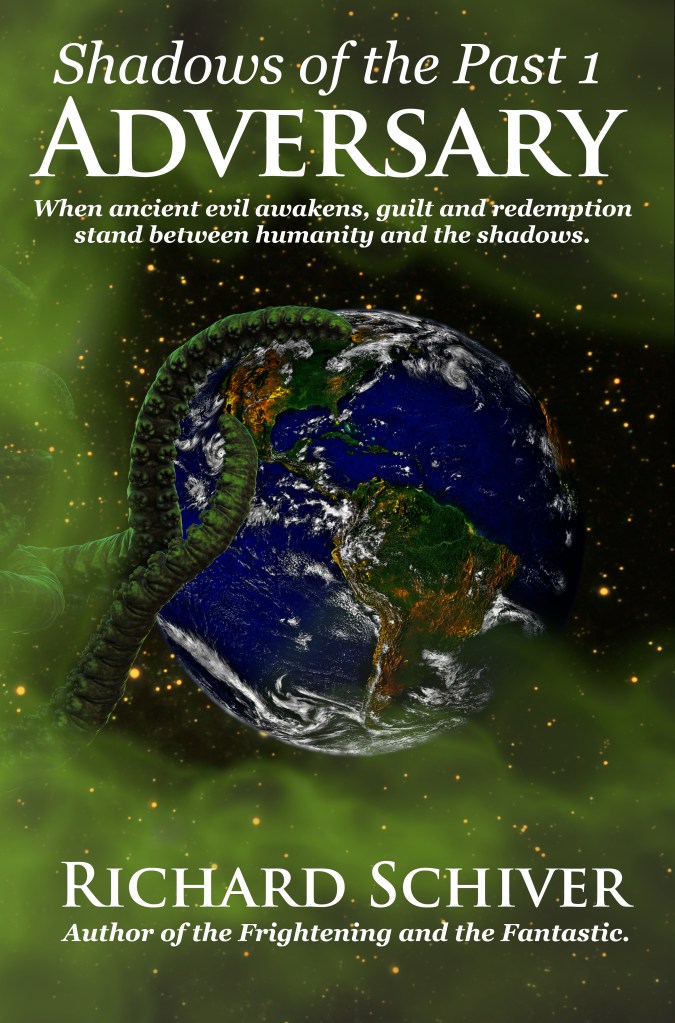
    Sheriff Odenton is a persistent old man who continues to show up in various other places in my work. He briefly appeared in Parasite, part two of my Shadows of the Past trilogy, and in my works in progress, Bitter Hollow, The Bad Place, and will take the stage again in The Gathering when I get around to writing it. Which will be the last chapter in a trilogy of books that started with Cursed.

    Cursed

    Click on the cover to purchase.

    After the loss of her husband, Susan sought a safe place to rebuild a life for herself and her six-year-old daughter, Christine. Quaint and picturesque, Porter Mines seemed ideal, but Susan soon learns appearances can be deceiving. 

    Like many small towns, the history of Porter Mines was woven in a tapestry of dark secrets. One centered on a witch, who vowed with her dying breath to claim vengeance against those who wronged her. A ghost story rooted in grisly truth. 

    Can Susan protect Christine from a wrath even death couldn’t tame?

    Or will her only child fall prey to the curse of Porter Mines?

  • How Everyday Life Sparks Great Writing Ideas

    How Everyday Life Sparks Great Writing Ideas

    One of the most common questions a writer hears is, “Where do you get your ideas?”

    Being the typical smartass that I am, I sometimes reply they come from the idea tree.

    But the real answer, when authors are willing to admit it, is simple, yet elusive. Ideas emerge from some of the most unexpected places. Maybe a fleeting moment, a snippet of conversation, or even a dream. For some, inspiration is rooted in personal experience or observation. Mark Twain famously based Huckleberry Finn on a childhood friend, proving that real life often provides the richest material for fiction.

    Other writers find their muse in the world around them. News stories, historical events, or even graffiti can spark that “what if?” moment that leads to a compelling narrative. Many authors, like Stephen King and Neil Gaiman, describe their ideas as arriving unbidden. Sometimes half-remembered, sometimes fully formed, yet always demanding attention.

    In his book On Writing, Stephen King spoke of ideas using the cup and the handle metaphor. How some ideas do not arrive fully formed and ready to go. But they get catalogued anyway until the idea that represents the handle or the cup arrives to complete the set.  

    But the secret isn’t just in having ideas. It’s in recognizing their potential. Writers train themselves to notice the unusual, the poignant, or the extraordinary in everyday life. They jot down stray thoughts, nurture them, and let them grow into stories. Sometimes, inspiration comes from other art forms, travel, or even the simple act of people-watching.

    For me personally I watch strangers. I work part time at Wally World, and I’ve wasted a few moments building narratives in my mind for the lives of the shoppers around me. Simple little tales that at times uncover a deeper narrative that refuses to be set aside. Like a hidden treasure trove of ideas that emerge from a simple act.

     Every writer’s process is unique. The magic comes with being open to inspiration while being brave enough to follow these ideas to where they ultimately lead. Turning ordinary moments into extraordinary tales.

    Where do your ideas come from?

  • Weekly Writing Challenge 01/21/2026

    Weekly Writing Challenge 01/21/2026

    The man in charge looked down upon him, his features twisted with a sadistic cruelty.

    “I thought we had agreed you weren’t going to cause any trouble, boy?”

    Gus shook his head as he worked his mouth silently.

    “Look at this, boys. It thinks it can speak.” The man in charge said. The other hands laughed, Gus’s subdued attacker lying at their feet. The rest of the captives kept their heads down in a submissive manner, their eyes fixed on the bowl in front of them.

    “Maybe a night in the box will teach him his place.” The man in charge said before the emptiness swelled up from the black depths around him to envelope him in its smothering embrace.

    He drifted across a black sea buoyed by a single thought that anchored him to the reality of his past. He was not like the others. He had a life, a family, a wife who loved him. The thought of abandoning her as he had, even though everything that had happened to him up to this point had been out of his control, sent a dagger of guilt into his heart. She would be frantic, not sure what to do, lost within the terror of being deserted.

    What was her name?

    He searched his memory for her name, the throbbing at the base of his skull growing as he struggled to remember even the simplest details of his past life. They had children, or did they? If only he could remember her name, it would strengthen the anchor that tied him to the reality of his past and give him hope to battle the despair his life had become.

    Around him the shadows were deep, the sides of the steel box in which he lay were pressed tight against his shoulders, the crown of his head was wedged against the top while his feet were pressed flat against the bottom. It was a cramped space with a narrow slit along the top that allowed a soft breeze to dance across his naked flesh.

    They had taken his poncho.

    With shaking hands he reached for the top, his palms encountering cold steel as he pushed against its unyielding surface.

    He was trapped within the confines of a box too small for his frame, filled with the need to get up and move around, a restlessness that became the center of his world. Beyond the box the night moved resolutely towards morning, the sky to the east growing lighter as the world continued to turn upon its axis, unaware, uncaring, following a course that had been plotted long before he’d been born and would continue long after he was gone.

    His legs grew even more restless, and he struggled to keep them under control as spasms racked his muscles. He didn’t know how long he’d lain unconscious in the box, but judging by the pain in his legs it had to have been the better part of the night.

    Maybe they’d let him out with the dawn, to work the fields, to move about freely with the others. The thought gave him a goal to focus on as the birds sang in greeting to the approaching dawn, somewhere a rooster crowed as he concentrated on that single thought.

    They were going to let him out soon.

    Somewhere a door slammed, keys jingled, and a muffled shout came from the low-roofed building where the others were being kept.

    As the first light of the coming dawn crested the roof of the barn the doors of the barracks swung open, and the workers were driven towards the building where they had been fed the night before.

    They’ll be coming soon, the thought whispered through his mind, followed promptly by another. They’ll let me out soon. His legs had fallen asleep, his buttocks was numb from resting on the unyielding steel, and the flesh covering the nubs of his shoulder blades felt like it was becoming raw.

    If you’d like to start the story from the beginning follow the link below.

  • Transforming Everyday Moments into Story Ideas.

    Transforming Everyday Moments into Story Ideas.

    I’m running a little late this week. That’s been the story of my life lately while I work to bring my post apocalyptic series to an end. Without further adieu let’s get into this.

    One of the most common questions a writer hears is, “Where do you get your ideas?”

    Being the typical smart ass that I am, I sometimes reply they come from the idea tree.

    But the real answer, when authors are willing to admit it, is simple, yet elusive. Ideas emerge from some of the most unexpected places. Maybe a fleeting moment, a snippet of conversation, or even a dream. For some, inspiration is rooted in personal experience or observation. Mark Twain famously based Huckleberry Finn on a childhood friend, proving that real life often provides the richest material for fiction.

    Other writers find their muse in the world around them. News stories, historical events, or even graffiti can spark that “what if?” moment that leads to a compelling narrative. Many authors, like Stephen King and Neil Gaiman, describe their ideas as arriving unbidden. Sometimes half-remembered, sometimes fully formed, yet always demanding attention.

    In his book On Writing, Stephen King spoke of ideas using the cup and the handle metaphor. How some ideas do not arrive fully formed and ready to go. But they get catalogued anyway until the idea that represents the handle or the cup arrives to complete the set.  

    But the secret isn’t just in having ideas. It’s in recognizing their potential. Writers train themselves to notice the unusual, the poignant, or the extraordinary in everyday life. They jot down stray thoughts, nurture them, and let them grow into stories. Sometimes, inspiration comes from other art forms, travel, or even the simple act of people-watching.

    For me personally I watch strangers. I work part time at Wally World, and I’ve wasted a few moments building narratives in my mind for the lives of the shoppers around me. Simple little tales that at times uncover a deeper narrative that refuses to be set aside. Like a hidden treasure trove of ideas that emerge from a simple act.

     Every writer’s process is unique. The magic comes with being open to inspiration while being brave enough to follow these ideas to where they ultimately lead. Turning ordinary moments into extraordinary tales.

    Where do your ideas come from?