Category: Random Musings

  • Looking Back 50 Years

    Looking Back 50 Years

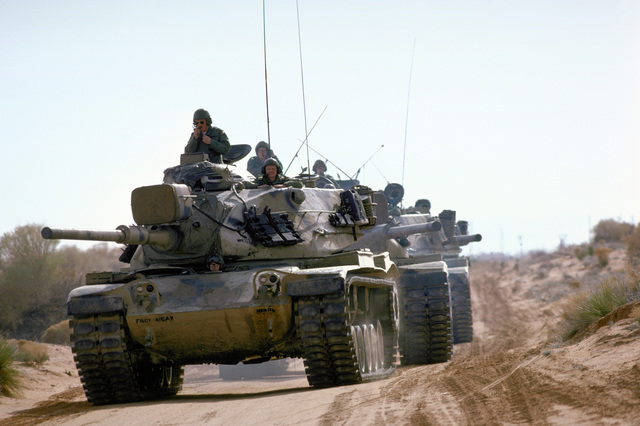
    50 years ago, at 17, I held up my right hand and swore an oath to protect the constitution against all enemies foreign and domestic. Served five years as an armor crewman with three deployments to West Germany, and came home to start my civilian life. I served with a number of men who fought in Vietnam and who earned my utmost respect for what they had done, and gone through.

    Until recently I never felt my service accounted for much. Never fired my weapon in anger, and while I had been shot at a couple of times it had been during training.

    To celebrate this milestone I posted the following on Facebook.
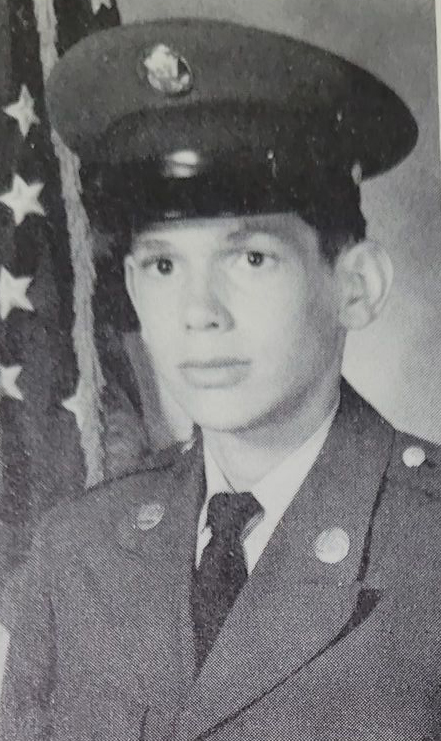
    Me in 1976
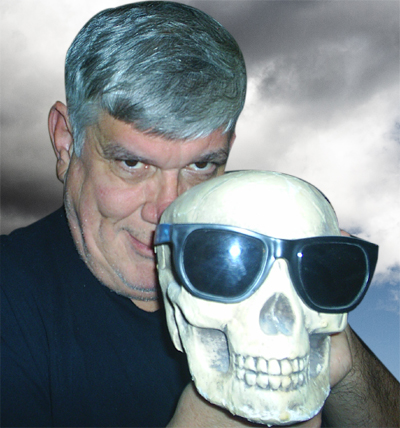
    Me now

    50 years ago on July 30, 1976, I boarded a bus for Pittsburgh, PA. The first leg on an adventure that would find me traveling to Germany three times to stand with my brothers against the threat of the Soviet Union and Warsaw Pact.

    Fifty years later the wall that separated East Germany from the west is gone. I’ve grown heavier, my hair has turned white, and my steps are not as assured as those of the bright eyed 17 year old I once was. But I wouldn’t trade that experience for anything.

    I learned things about myself, the world around me, and those who stood with me that no amount of formal education could ever replicate. I’m honored and thankful to have served my country.

    The response was overwhelming. But one really stood out and it reassured me I had done the right thing and made a difference no matter how small it might have been.

    I’ve been thanked for my service in the past, but nothing brought it home to me like a comment from a man who had been born in Berlin in 1961. Who managed to leave in 1979 to come to the United States. A sincere thank you from someone who everyday of their childhood lived under the threat of a Soviet takeover had it not been for those of us who stood firm in the defense of a people we didn’t even know.

    It reminded me of the family I met in Germany who took us into their home when our equipment broke down during field exercises. They fed us, helped keep us warm, and sincerely thanked us for just being there and doing what we were doing.

    I’ve always been a private person, rarely sharing my feelings with anyone but those closest to me. An attitude in sharp contrast to my desire to build an audience for my writing, but it is something I’m going to try to remedy in the future. I’m going to start sharing stories from my past, some are funny, some are not. But they’ll offer a snapshot into the events that shaped who I have become.

  • Update 06/22/2026

    Update 06/22/2026

    First and foremost I want to apologize for vanishing like I did.

    At the end of April, during a routine checkup I received some news that shocked me and brought my mortality to the forefront of my consciousness. I’ve always known that I wouldn’t live forever, but at 67 I figured I had another twenty to thirty years left in me. I may still have that much time left, but the news I received drastically changed my outlook on my diet and the things I’ve been putting into my mouth over all these years.

    I was diagnosed with stage 3A chronic kidney disease. Which is considered the first step towards dialysis. Which was scary for me as my mom went through dialysis three times a week before she died, and every time she was left feeling drained. She would feel so bad afterwards that all she wanted to do was die. Eventually she refused the procedure entirely and passed at the age of 77.

    She did have other health problems that I don’t have at this point and hopefully will never develop. She was a type 2 diabetic and had lost a leg to that disease. She also refused to take care of herself like she should.

    The news made me take cold hard look at what I had been eating and adjust my diet to help combat the diseases progression. While stage3a cannot be cured, it can be managed. That’s what I’m fully focused on now, managing the disease to slow or stop its progression.

    Like I said, I want to stick around for another twenty to thirty years, and I’d like to remain as healthy as humanly possible during the remaining years I have left. There are many more stories I want to write and share with my audience. More books searching for their unique voice I hope everyone will enjoy.

    I’ve also changed the direction of the story I had been writing for the weekly writing challenge. Working with the scientific jargon for the story overshadowed the emotionally charged elements I was striving to impart. K is for Karst will be replaced with K is for Knucklebones. While the game has been around since the times of ancient Greece, I’m brining a ghostly twist that I hope everyone will enjoy. I may revisit the Karst in the future, but it wasn’t speaking to me on the same level knucklebones is.

    Until Wednesday then.

  • The Fear of Unfinished Business in Horror Stories

    The Fear of Unfinished Business in Horror Stories

    If there’s one topic horror writers never seem to get tired of, it’s what happens after we die. Honestly, that makes perfect sense. Death is the biggest mystery we face, and horror has always been the genre most willing to poke it with a stick and ask, “What if?”

    For horror writers, the idea of life after death isn’t always about faith or religion. More often, it’s about possibility. What if death isn’t the end? What if something lingers? What if the story keeps going, even when the heart stops beating? Those questions are irresistible when you’re trying to scare or unsettle someone.

    Ghost stories are the most obvious example. Spirits hang around because something went wrong. A wrong wasn’t righted. A secret remained buried. A promise was broken. That idea taps into a very human fear. That we don’t get closure, even in death. Horror takes that fear and gives it teeth.

    What’s interesting is that horror writers don’t usually paint the afterlife as comforting. You won’t find many cozy clouds and harps. Instead, you get unfinished business, strange, in between places, or worlds with rules no one fully understands. That uncertainty is the point. Not knowing is far scarier than any clear answer.

    A writer’s personal beliefs often sneak into these stories, whether they mean them to or not. Writers who believe in an afterlife might treat death as a doorway. Sometimes beautiful, sometimes terrifying. Writers who don’t might frame a haunting as emotional echoes. Grief that won’t let go, guilt that refuses to stay buried. Either way, horror becomes a way to process big, uncomfortable thoughts without needing to solve them.

    That’s the real appeal. Horror doesn’t demand answers. It lets us sit with the questions. It gives us permission to wonder what happens next and to admit that the idea scares us.

    In the end, horror writers return to life after death for the same reason readers do. Because we’re curious, and because we’re afraid. The tension between endings and aftermaths is where horror lives. Maybe death is silence. Maybe it’s an echo. And maybe the scariest possibility of all is that something is still listening when we think the story is over.

  • Writing in Old Age: A Journey of Reflection and Expression

    Writing in Old Age: A Journey of Reflection and Expression

    As a writer ages time becomes more malleable, seeming to have changed shape while we are distracted. The hours may feel longer in some cases while for others, me included, the hours fly by. The years pile up behind us like heavily edited manuscripts, full of red, and sometimes regret at missed opportunities. Writing stops feeling like a ladder we climb towards some lofty goal, and more like a comfortable chair we sink into with an honest familiarity.  

    When I started in 1991 I belonged to a small group of writers who met monthly via snail-mail. We called ourselves the Night Writers and worked to hone our craft while encouraging and celebrating the achievements of the other members. I recall one discussion in which we talked about aging, and the strong possibility of not hitting the goals we sought until we were well into our sixties.

    This past December I celebrated 67 trips around the sun, and I’m still plugging away, searching for that one elusive story that will put me over the top. The one I’ve been chasing since the day I started pouring out my soul on the typewriter.

    When we’re young, we write to prove we’re here. Later, we may write to understand what being here means. Age doesn’t only bring loss. It brings angles. The same childhood kitchen, the same first job, the same arguments you swore you’d never repeat. Looking back, they reveal the patterns you couldn’t see while you were living them. Mostly because you were too busy being dramatic.

    That widened perspective is not nostalgia, but material.

    Memory frays. Names go missing. Dates slide by the wayside. You can walk into a room with purpose then stand there like an actor who’s forgotten their line. Writing in old age doesn’t have to pretend to be a ledger. In fact, the gaps can become part of the form. You can write around what you can’t recall, noting the blank spaces the way you’d notice a torn page, with curiosity rather than shame. Sometimes the truth lives in the feeling you can still summon, or in the questions that remain after the facts have softened.

    The work may need to adapt. A daily ritual can be smaller now, two pages instead of ten, fifteen minutes instead of an afternoon. Of course, afternoons may now include an appointment for your knees. You discover large-print settings, a better lamp, a softer chair, or dictation when fingers ache. These aren’t compromises so much as craft decisions that keep the door open. The goal is continuity, not heroics. Keep a notebook within reach. Draft letters you may never send. Start with a single sensory detail. The sound of a screen door. The smell of rubbing alcohol. The color of late winter light, or the mysterious creak you swear the house is making just to get your attention.

    Old age also changes the question of audience. You may still publish, still chase polish and acclaim, still argue with a paragraph the way you once argued with a teenager (and yes, the paragraph is winning). But you might also write for a grandchild who hasn’t been born yet, or for the friend you miss, or for yourself on a day when the world feels narrow. Writing becomes a way to keep company. An intimate conversation with your own mind, conducted in sentences that can be revisited when words are hard to find out loud.

    In the end, writing and old age share a quiet discipline. Paying attention. To what endures, to what changes, to what you can still choose. A paragraph is small, but it is a decision, an act of shaping experience rather than letting it simply pass. If the body insists on limits, the page can offer range. And if you keep writing, even in brief bursts, you’re not only recording a life; you’re continuing it. One sentence at a time. Preferably before you put down your pen and wonder where it disappeared to.

  • Exploring the Power of Horror Tropes in Storytelling

    Exploring the Power of Horror Tropes in Storytelling

    Storytelling thrives on the familiar and the unexpected. Nowhere is this more evident than in the use of tropes. Tropes, recurring themes, motifs, and character types are the building blocks of narratives. Shaping how stories unfold and how audiences connect with them. In horror, tropes like the “final girl,” haunted houses, forbidden fruit, or the impostor in plain sight are instantly recognizable, but their influence extends far beyond the genre.

    What makes horror tropes so powerful is their adaptability. The “final girl,” for example, is a staple of slasher films, representing resilience and survival. Yet, this trope appears in thrillers, action movies, and even science fiction, where a lone protagonist must confront overwhelming odds. Haunted houses, another classic horror motif, are not limited to ghost stories. They can symbolize psychological turmoil in dramas or serve as metaphors for societal decay in dystopian fiction.

    Tropes also serve as bridges between genres. The forbidden fruit, rooted in horror’s fascination with temptation and consequence, is equally at home in romance, fantasy, and crime stories. By crossing genres, tropes invite writers to subvert expectations, blending elements of horror with comedy, mystery, or adventure. This fusion creates fresh narratives that surprise and engage readers, challenging them to reconsider what they know about both horror and storytelling itself.

    Moreover, tropes influence how stories are told and received. They provide a shorthand for emotion and meaning, allowing writers to quickly establish atmosphere or character dynamics. When used thoughtfully, tropes can deepen psychological tension, heighten suspense, or evoke empathy. However, their true power lies in reinvention. Horror writers excel at twisting familiar tropes, breathing new life into old patterns and crafting stories that resonate across genres.

    In the end, tropes are not just tools for horror. They are catalysts for creativity, shaping the stories we tell and the ways we experience them, no matter the genre.