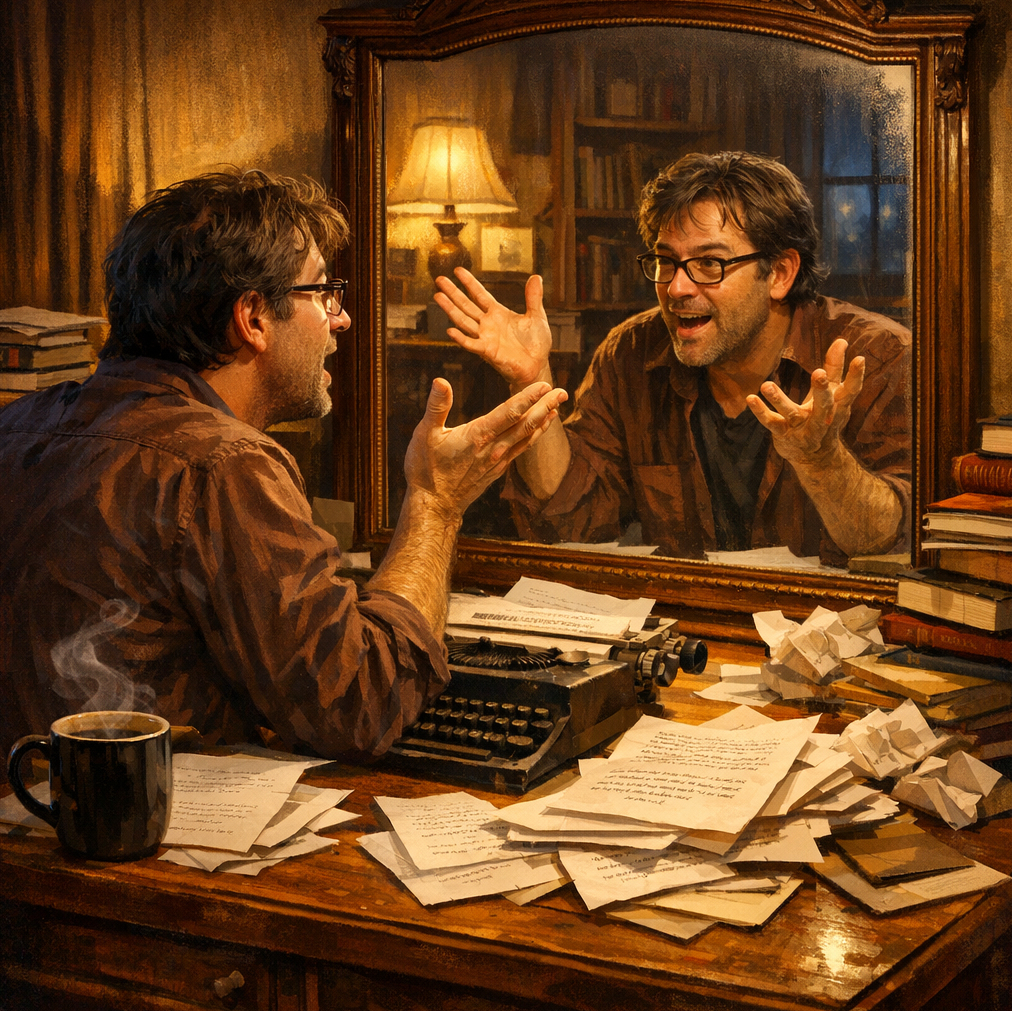
Category: Character inrerview

  • A conversation with myself. Cheryl from Adversary

    A conversation with myself. Cheryl from Adversary

    1. Can you describe how your mother’s death changed your relationship with your father and your brother Frankie?

    When Mom died, it was like the ground disappeared beneath us. Dad just shut down. He was there, but not really there, you know? He drank more, and I felt like I had to be the adult, especially for Frankie. He needed someone, and I guess I needed to feel needed. But it was lonely. I missed having a real family, and sometimes I was angry at Dad for not being able to hold it together for us.

    2. What was going through your mind the night you left home with Andrea and her friends?

    Honestly? I was mad. At Dad, at Michelle, at the world. I wanted to get away, to feel like I had some control over my life. I thought maybe if I just left for a while, someone would notice. But mostly, I just wanted to forget everything for a night. I didn’t realize how quickly things could go wrong.

    How did you feel when you realized you were in over your head with Andrea’s group and the events that followed?

    Terrified. I tried to act tough, but inside I was panicking. I kept thinking, “What have I done?” I wanted to go home, but I was too proud to admit it. When things got violent, I just wanted to disappear. I felt so stupid for putting myself, others in danger.

    4. What was your relationship like with Michelle, and how did it evolve over the course of the story?

    At first, I hated her being around. She wasn’t my mom, and I didn’t want her to try to be. I was jealous, I guess, and angry that she could step in when I felt so lost. But she never gave up on us. She was there, even when I pushed her away. Over time, I saw how much she cared, and I realized she was hurting too. Now, I’m grateful for her. She’s family.

    5. Can you talk about your protective feelings toward Frankie? What drives you to defend him, even at great personal risk?

    Frankie’s my little brother. He’s different, and people don’t always understand him. After Mom died, I felt like it was my job to look out for him. He’s innocent, and I couldn’t stand the thought of anyone hurting him. I guess I needed to protect him because I couldn’t protect Mom, and I didn’t want to lose anyone else.

    6. How did you cope with the guilt and trauma after the violent events involving the police and your classmates?

    I didn’t, not at first. I tried to pretend it didn’t happen, but the nightmares wouldn’t let me forget. I felt guilty for surviving, for not doing more, for being there at all. It took a long time to talk about it, and even longer to forgive myself. Dad and Michelle helped, just by being there and not judging me.

    7. What did it mean to you when Michelle gave you the family heirloom on your eighteenth birthday?

    It meant everything. It was like Mom was reaching out to me, telling me it was okay to move forward. Michelle didn’t have to do that, but she did, and it made me realize she really cared. It helped me let go of some of the anger and finally accept her as part of our family.

    8. How did your view of your father change as he confronted his own grief and the supernatural threats facing your family?

    I saw him as human again. Not just my dad, but a person who was hurting and trying his best. When he fought for us, I realized he hadn’t given up, that he was just lost. It made me want to forgive him, and to try to rebuild what we’d lost together.

    9. Looking back, what advice would you give to someone facing loss and feeling alone, as you once did?

    Don’t shut people out. It’s easy to get angry and push everyone away, but that just makes it worse. Let people help you, even if you don’t think you want it. And don’t be afraid to talk about how you feel. You’re not alone, even when it feels like it.

    10. Now that your family has found some peace, what are your hopes for the future, for yourself, and for Frankie and your new family?

    I just want us to be happy. I want Frankie to have a chance at a normal life, whatever that means for him. I want Dad to find peace, and for Michelle to know she’s loved. As for me, I want to move forward, maybe go to college, and see what life has to offer. I want us to be a real family again.

    If you’d like to learn more about Cheryl and her family grab a copy of Adversary, book one in the Shadows of the Past trilogy.
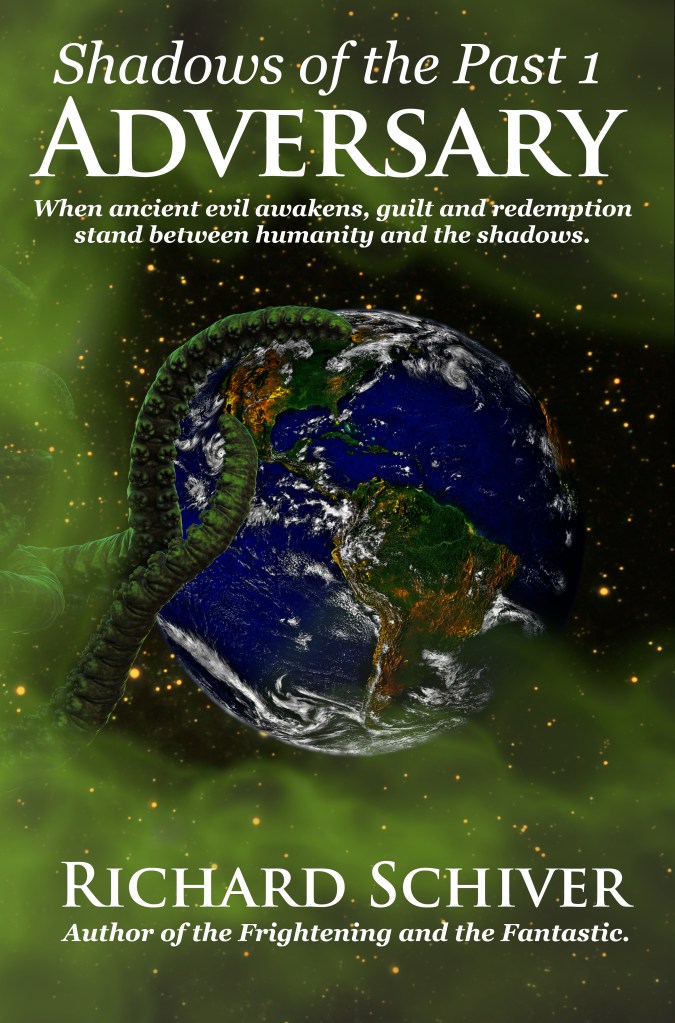
    Click on cover for more info.
  • A conversation with myself.

    A conversation with myself.

    This week I speak with Meat, the main character in This Lawless Land, a six book post-apocalyptic series. The first book, All Roads Lead to Terror will be updated next week.

    1. Can you describe what motivates you to keep going in such a harsh, post-apocalyptic world?

    I guess what keeps me moving is the hope that things can get better, even if it’s just for a little while. I’ve seen too much loss to believe in miracles, but I can’t just sit back and let the world swallow up the people I care about. Maybe it’s stubbornness, or maybe it’s just wanting to prove I’m more than what my name says I am. I want to help others survive, especially the kids who got taken. If we don’t look out for each other, who will?

    2. How did your upbringing shape the person you are now?

    My childhood was a mess—always running, never safe, never really wanted. My mom called me Meat because, to her, that’s all I was. I grew up with survivors, not family, and learned early that you can’t count on anyone but yourself. But I also learned that sometimes, you must step up for others, even if it hurts. That’s what makes you more than just Meat to the world.

    3. What does leadership mean to you, especially when you’re leading other kids?

    Leadership isn’t about being the loudest or the strongest. It’s about making hard choices and carrying the weight when things go wrong. I never asked to be in charge, but people look to me because I’ve survived outside the fence. I try to keep everyone together, even when I’m scared or unsure. Sometimes, all you can do is keep moving forward and hope your choices don’t get someone killed.

    4. How do you handle fear, both your own and that of your friends?

    Fear never really goes away. I feel it every day, especially when I think about what could happen to the people I care about. I try not to show it, because if I fall apart, so does everyone else. I focus on what needs to be done. Tracking, fighting, surviving. If I let fear take over, we’re all dead. So, I push it down and keep going.

    5. What do you think about the rules at Bremo Bluff, especially the ones about outsiders and survivors?

    The rules at the Bluffs are harsh, but I get why they exist. If word got out about what we have—electricity, water, safety. Everyone would want in, and we’d be overrun. Still, it doesn’t sit right with me that people who know about us can’t ever leave. It’s like a prison, even if it’s for our own good. Sometimes I wonder if we’re really any better than the people we’re afraid of.

    6. How do you deal with loss, especially after everything you’ve seen and done?

    Loss is just part of life now. I’ve lost friends, family, even people I barely knew. It hurts every time, but you can’t let it break you. I try to remember the good things, the small moments of hope or laughter. But I also use that pain to keep me sharp. If I forget what I’ve lost, I might get careless, and that’s when people die.

    7. What do you think about hope? Is it a weakness or a strength?

    Hope is the only thing that keeps us going. Without it, we’d just give up and let the world win. It’s not weakness to hope for something better, even if it’s just a hot meal or a safe place to sleep. Hope is what makes us human. It’s what separates us from the monsters, both the dead and the living.

    8. How do you view the adults who survived the awakening compared to your own generation?

    Most of the adults are broken by what happened. They remember the world before, and that makes it harder for them to adapt. My generation, we never really knew anything else. We grew up in the ruins, learned to fight and survive from the start. Maybe that makes us harder, or maybe just more desperate. Either way, we’re the future, for better or worse.

    9. What’s the hardest decision you’ve had to make so far?

    Letting go of the idea that we could save everyone. Sometimes, you must make choices that haunt you. Like leaving someone behind or doing what needs to be done to protect the group. The hardest was probably agreeing to the council’s rule that there could be no survivors among the kidnappers. It made me question if we were still the good guys.

    10. If you could change one thing about your world, what would it be?

    I’d bring back a sense of safety, even if just for a day. A world where kids could play without looking over their shoulders, where families didn’t have to choose between survival and their humanity. I’d want a world where names mean something, where you’re more than just a walking bag of meat to the people around you.

    In the coming months you will have the opportunity to follow Meat’s story as the series is released in its entirety. I’m nearly done with the final book and have hired a good cover designer to help me bring these stories to life.

  • A Conversation with Myself

    A Conversation with Myself

    An interview with Sheriff Paul Odenton.

    Sheriff Paul Odenton appeared as a supporting character in Cursed, which I realize now I should have titled. The Curse of Porter Mines.

    1. Sheriff Odenton, you’ve served your community for decades. What first inspired you to pursue a career in law enforcement, and how has your perspective on the job changed over the years?

    When I was a young man, I believed in the idea of justice, of right and wrong being clear as day. My father always said someone had to stand up and do the hard things, and I suppose I took that to heart. Over the years, though, I’ve learned that the world isn’t so black and white. There’s a lot of gray and sometimes doing the right thing means making choices that haunt you long after the paperwork’s filed.

    2. The disappearances of children in Porter Mines have haunted your career. How do you cope with the emotional toll of unsolved cases, especially those involving the most vulnerable members of your community?

    You never really cope, not fully. Those faces stay with you. You see them in your dreams, and you hear their parents’ voices every time the phone rings. I try to remind myself that I did everything I could, but the truth is, you always wonder if you missed something. I lean on my wife, Maggie, and the folks I trust. Sometimes, all you can do is keep going and hope you make a difference the next time.

    3. Throughout the investigation, you’re confronted with both rational explanations and local legends, such as the Witch of Porter Mines. How do you balance skepticism with the need to respect the fears and beliefs of the townspeople?

    I was trained to look for evidence, to trust what I can see and prove. But in a place like Porter Mines, legends are as real as the ground we walk on. Folks need something to explain the unexplainable. I try to respect that, even if I don’t always believe it myself. Sometimes, listening to their fears is as important as chasing down leads.

    4. The events in Porter Mines often put you at odds with political pressures and public scrutiny. How do you maintain your integrity and focus on justice when facing criticism from both the community and local government?

    It’s not easy. There’s always someone looking over your shoulder, second-guessing your decisions. I remind myself why I took this job in the first place, to protect people, not to win popularity contests. I do my best to be honest, even when the truth is ugly, and I try to treat everyone fairly, no matter who’s watching.

    5. In your view, what role does the past, both personal and communal, play in shaping the present dangers and fears in Porter Mines?

    The past never really leaves us. In Porter Mines, old wounds fester, and stories get passed down like family heirlooms. Sometimes, the things we don’t talk about, like secrets and regrets are what hurt us most. I’ve seen how history repeats itself when we don’t face it head-on. That’s true for families, and it’s true for towns.

    6. You’ve witnessed the impact of trauma on families, including your own. What advice would you give to others in law enforcement about supporting victims and their loved ones through tragedy?

    Listen. Don’t just go through the motions, really listen. People need to know you care that you’re not just another badge. Be patient, and don’t make promises you can’t keep. Sometimes, all you can offer is your presence and your willingness to help them carry the weight, even if only for a little while.

    7. Now that the case has reached its conclusion, what lessons do you hope the community, and perhaps future generations of law enforcement, will take from your experiences in Porter Mines?

    I hope folks remember that evil isn’t always a stranger in the night, it can be the things we ignore, the pain we bury, or the anger we allow to fester. For those who come after me, I’d say. Never stop asking questions, never stop caring, and never forget that every case is someone’s whole world. Sometimes, the only thing standing between hope and despair is the person willing to keep searching for the truth.

    Sheriff Odenton is a persistent old man who continues to show up in various other places in my work. He briefly appeared in Parasite, part two of my Shadows of the Past trilogy, and in my works in progress, Bitter Hollow, The Bad Place, and will take the stage again in The Gathering when I get around to writing it. Which will be the last chapter in a trilogy of books that started with Cursed.

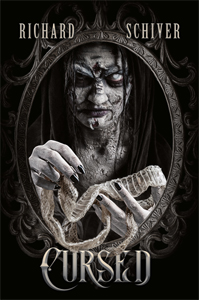
    Cursed

    Click on the cover to purchase.

    After the loss of her husband, Susan sought a safe place to rebuild a life for herself and her six-year-old daughter, Christine. Quaint and picturesque, Porter Mines seemed ideal, but Susan soon learns appearances can be deceiving. 

    Like many small towns, the history of Porter Mines was woven in a tapestry of dark secrets. One centered on a witch, who vowed with her dying breath to claim vengeance against those who wronged her. A ghost story rooted in grisly truth. 

    Can Susan protect Christine from a wrath even death couldn’t tame?

    Or will her only child fall prey to the curse of Porter Mines?